By
By 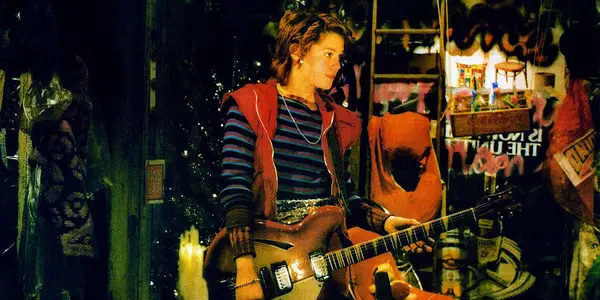
For a brief, shining moment in the 2000s, girls ruled on screen. No, strike that, they didn’t just rule–– they rocked.
The history of punk rock, though often most strongly associated with the misogynistic ethos of the angry young men who dominated much of the hardcore scene in the ‘80s, is inextricable from the talented, badass women who shaped its trajectory, from Patti Smith to Debbie Harry to Joan Jett. The same could be said for the movies. While many of the flicks that shaped punk iconography center on men (Suburbia, SLC Punk, etc.), as early as 1980, the punk rock ethos that had already begun to captivate girls was put to screen in the triumphantly grungy, openly queer Times Square, the first of a series of love letters to teen rebellion by Allan Moyle (Pump Up the Volume, Empire Records), this one produced by Saturday Night Fever’s Robert Stigwood. Two years later, the same year as Susan Seidelman’s Smithereens, music legend Lou Adler brought American girls another tale of tween girl punk Ladies and Gentlemen, The Fabulous Stains. In all three films, young women start bands and stick it to the man, practically radiating badassery with sick wardrobes and feral grins that made you want to pick up a guitar and head to the big city. Thus the appeal of punk for women as brought to you by The Slits, Siouxsie and the Banshees, The Raincoats, Poison Girls, or Babes in Toyland (not to mention movies like Satisfaction, Vicious Lips, and The Legend of Billie Jean): Freedom from feminine stereotyping, full license to misbehave, power over your body, and a take-no-shit attitude.
source: Kino Lorber
What’s not to love? By the time the ‘90s rolled around, Kathleen Hanna brought us the actively political (it was born alongside the feminist Third Wave), sex positive, girl-forward brand of punk known as Riot Grrrl, pulling out these threads and, as she always put it, bringing girls to the front of the scene. While the movement that was Riot Grrrl popularity only lasted a few years––by 1994 Hanna had lost faith in her platform as the mainstream media denigrated the scene and the scene fractured becoming more of a subculture–– the ethos bands like The Donnas, The Distillers, Bikini Kill, and L7 brought to music was undeniable, right up there with Nirvana blowing the fuse on grunge Green Day codifying the sound of suburban angst with Dookie. They shaped feminism too, bringing what Kat in 10 Things I Hate About You called “angry girl music of the indie rock persuasion” to Taking Back the Night and helping women cross Evangelical pickets at abortion clinics.
This history lies just under the surface of the more corporate, more forgiving Girl Power aesthetic of the Y2K era everyone’s so nostalgic for at the moment, even if the Spice Girls can’t hold a candle to Bikini Kill (but in the rosy light of retrospect, not to mention the nostalgia of my own childhood, why pit queens against each other?). Speaking of the Spice Girls, Girl Power’s more commercial brand of you-go-girl attitude was palatable enough to bring another wave of girls rocking to the movies, if in a slightly more polite way than the previous decade, starting with Spice World in 1997 and bringing us through the end of the decade with everything from Indies like All Over Me, The Incredibly True Adventures of Two Girls in Love, or Go, to more mainstream offerings like Empire Records to Josie and the Pussycats to The Craft (whose soundtrack makes it a worthy addition to this list even if the girls weren’t in a band… The Hex Girls anyone?).
source: Universal
Which brings us, of course, to Freaky Friday. By the early-mid 2000s, pop punk had gone nuclear: Green Day outdid themselves with American Idiot, Blink-182 was at Warped Tour–– and Avril Lavigne was the Pop Punk Princess. She rocked her lowrise camo pants, racoon eyeliner, and chunky highlights on more music magazine covers than you can shake a drumstick at (2002’s Let Go is still the best selling Canadian album of the 21st century to this day)… and so did Lindsay Lohan. Lohan was only just beginning to shake her child star persona when Freaky Friday came out in early August 2003, and her influence on tweens was seismic. While pop punk pervaded soundtracks in films geared towards teens in movies as varied as American Pie and Scooby Doo, Freaky Friday, like 2003’s Prey for Rock & Roll, centered punk for girls. Anna (Lohan) and her Josie and the Pussycats-style band, Pink Slip, blast their guitars in their garage while women-fronted pop punk bands like Lash and Lillix fill out the soundtrack alongside Bowling for Soup and Simple Plan. The entire film highlights the contrast between Anna’s punk-coded rebellion (talking about The Raincoats with her crush at a coffeeshop, riding motorcycles, desperately wanting to get a cartilage piercing, standing up to her sexist English professor and a mean blonde prep) and her mom (Jamie Lee Curtis) Tess’ sympathetic-yet-square perspective as a middle-aged therapist, with Anna’s passion for her music the central point of tension. The film ends with Pink Slip winning a competition at the House of Blues and the girls playing a Shrek-style closing number (it was 2003 afterall) at Tess’ wedding.
source: Disney
This character, alongside the likes of Haley in Stick It, Enid in Ghost World, Smashley in Whip It, Juno in Juno, or Olive in Easy A (take your pick, really, this was an incredibly common kind of character thanks to the legacy of Girl Power and Riot Grrrl) was an excellent release valve for the young would-be Riot Grrrls living under Bush-era hyper-feminine “postfeminism.” Echoes of this kind of mode continued throughout the decade with flicks like We Are the Best! and The Runaways, as well as on soundtracks like Jennifer’s Body (recall the Hole, All Time Low, and Panic! At the Disco needle drops, not to mention Colin Grey bumping it to Screeching Weasel) and even the Paramore-and-Linkin-Park-fueled angst of Twilight, validating the power of punk to speak to young women even in the aughts mainstream. As this might indicate–– and to be clear I’m talking to you now Disney–– punk was fundamental to the aesthetic and emotional appeal of Freaky Friday.
So it was with something close to horror that I watched grown-up Anna in Freakier Friday deliver her only new song, a soft, treacly pop ballad she’s written, to her Lady Raven-esque pop star client Ella (Maitreyi Ramakrishnan) this week, particularly after an opener that teases Anna’s latent yearning to rock out. Say what you will about the movie. Its problems are myriad: Narratively, every character is so thinly drawn that it’s hard to even discern which woman swapped with which girl, or why we should care at all; the cinematography is just as grey and demoralizing as early reports (and memes) made it out to be; the editing is alternatingly jagged and listless; the conflict is half-baked at best, utterly lacking in thematic resonance. In other words, no punk rock here. While the final scene does feature a reprise of “Take Me Away,” Pink Slip’s main song from the original, it lacks any emotional depth in the context of a film where the only discussion of rebellion comes in the opening scene, when Tess twinklingly reveals her new wellness podcast is called Rebelling with Respect.
source: Disney
The soundtrack has shifted to a more pop register as well, featuring Chappell Roan, Britney Spears, and The Spice Girls, all oddly flat and politely low-in-the-mix. Of course, shifting the generic valence of the soundtrack to reflect current young women’s tastes is understandable, even a good thing. But in this context, the choice speaks to the underlying issue at the heart of the film: Toothlessness. Where the original Freaky Friday spoke to girls about the validity of their frustrations and the daily unfairnesses of sexism right alongside teen angst goofiness of mom not letting you get your bellybutton pierced, the sequel doesn’t say much of anything about anything. The music here seems like filler, and, frankly, so does the whole movie.
That’s a missed opportunity. In this moment of Y2K nostalgia and resurgent conservative political backlash to feminism, we need punk rock, especially for young women–– and the godmothers of punk as well as pop punk all know that! Hayley Williams just went on tour, Avril just dropped a new album, Kathleen Hanna is making the rounds bringing trans girls to the front. In this moment, we should all be reminding girls that they can still rebel. And that goes for the movies, too, especially for kids. As we languish at the far end of a decade replete with live action remakes, legasequels, and the diminishing returns for even Pixar, we should be reminding Disney that they can still play in the key of rock.
Does content like this matter to you?
Become a Member and support film journalism. Unlock access to all of Film Inquiry`s great articles. Join a community of like-minded readers who are passionate about cinema – get access to our private members Network, give back to independent filmmakers, and more.